Attention & Dopamine · Mechanism
Why You Can't Stop Doomscrolling (It's Not Weak Willpower)
Doomscrolling isn't weak willpower. In 2025, 40% of people said they now avoid the news (up from 29% in 2017). Here's the mechanism, and how to break the loop.
 by Alex July 10, 2026 14 min read
Here’s a number that should make you feel less alone. In 2025, 40% of people said they sometimes or often avoid the news, up from 29% back in 2017 (Reuters Institute, 2025). Among 18 to 24 year olds, 43% say the sheer volume wears them out. So if you keep opening a feed that leaves you feeling worse, you’re not weak. You’re reacting to something built to hold you.
Doomscrolling isn’t a discipline problem. It’s a mood-repair habit running on a slot-machine reward schedule, wired in by design. This guide shows you the mechanism first, then the fix: friction and a replacement behavior, both tested in real trials. Not shame, and not more willpower. Motivation is a mood, and systems beat willpower every time.
The Bottom Line
- Doomscrolling is a mood-repair loop, not a character flaw.
- The feed runs on variable-ratio rewards, the same schedule as a slot machine (Addictive Behaviors, 2023).
- Willpower loses to design: grayscale mode beat self-set goals in a 2023 trial (Zimmermann & Sobolev, 2023).
- The fix is friction plus a ready replacement, not more guilt.
In this guide:
- What doomscrolling really is
- Why you can’t stop scrolling
- It’s not willpower, it’s design
- What actually stops doomscrolling
- The 352-times-a-day myth
- A no-shame 5-minute reset
- FAQ
What is doomscrolling, really?
Doomscrolling means compulsively scrolling through bad news, long past the point it helps anyone. In 2022, a University of Florida team built the first scientific scale for it. Their 15-item measure found men and younger people do it most (Sharma, Lee & Johnson, 2022). So it’s a defined, measurable behavior now, not just a vague mood.
The reach is enormous. In 2025, Pew found 84% of US adults use YouTube and 71% use Facebook. About half of 18 to 29 year olds are on TikTok every day (Pew Research Center, 2025). These feeds are where a whole generation now lives.

And it gets more uncomfortable. A 2022 study in Applied Research in Quality of Life linked doomscrolling to fear of missing out (r = .377) and social-media addiction (r = .358). It also tied the habit to lower life satisfaction through psychological distress (Satici et al., 2022). The more you scroll the doom, the worse you tend to feel.
And it doesn’t stop at a bad afternoon. A 2024 study of students in the US and Iran found doomscrolling predicted existential anxiety, that low hum of dread about meaning and mortality (Shabahang et al., 2024). So is it harmless background noise? The data says no. Heavy scrolling can shade how you see the whole world.
Why can’t you stop scrolling?
You can’t stop because scrolling is emotional first aid. A 2023 paper in Addictive Behaviors ties behavioral addiction to variable-ratio reinforcement: unpredictable rewards on an unpredictable schedule. Social feeds run on exactly that (Addictive Behaviors, 2023). Your thumb is playing a slot machine, and it doesn’t know it.
Here’s the part almost nobody connects. Doomscrolling is procrastination wearing a scarier costume. Back in 2013, researchers showed procrastination is short-term mood repair: you dodge a bad feeling now and pay for it later (Sirois & Pychyl, 2013).
Doomscrolling runs the exact same loop. You feel bored, anxious, or lonely. You scroll to escape it. For a few seconds, relief. Then the feed hands you something new to worry about, and the bad feeling returns bigger. So you scroll again. That’s negative reinforcement, and it trains itself into a groove.
Two design tricks keep the loop spinning. First, the reward is random. Most posts bore you, but every so often one lands, and that uncertainty is exactly what keeps you pulling the lever. If you want the deeper version, this is how variable rewards hijack dopamine.
Second, the scroll never ends. Aza Raskin, the engineer who built infinite scroll, has publicly said he regrets it. There’s no bottom of the page anymore, so there’s no natural cue to stop. No stopping cue means no obvious moment to quit. So is it any wonder you can’t just “put it down”?
It’s not weak willpower, it’s design
The clearest sign this is design, not weakness: people are quitting the news in droves. In 2025, 40% said they sometimes or often avoid it, up from 29% in 2017, and 39% blamed the hit to their mood (Reuters Institute, 2025). That’s not millions of people going soft at the same moment.
When a behavior jumps across an entire population in eight years, the cause isn’t personal willpower. It’s the environment. So did a whole planet suddenly go soft at once? Unlikely. The apps got better at holding attention, and human self-control stayed exactly where it’s always been. Blaming yourself here is like blaming your umbrella for the rain.
Straight talk: at the population level, whether phones are damaging teen mental health is genuinely contested. Some researchers make a strong causal case (Sigaud, Rausch & Haidt, 2026). Others find the population data too weak to support it (Odgers, 2024; Vuorre, Orben & Przybylski, 2021). What isn’t contested: at the individual level, heavy doomscrolling tracks with real distress, and the trials below actually work. That’s where this guide stands.
What actually stops doomscrolling?
What works is friction, not fresh willpower. In a pre-registered 2023 trial, switching a phone to grayscale beat letting people set their own screen-time goals. The design change caused an immediate, measurable drop, while goal-setting alone produced a smaller, slower one (Zimmermann & Sobolev, 2023). You change the environment, not your character.
The numbers back it hard. Turning a phone grayscale cut daily screen time by about 40 minutes in one study of undergrads (Holte & Ferraro, 2020). A 2026 replication with medical students found a 28-minute drop (Frontiers in Digital Health, 2026). Dull colors, less pull.
I ran grayscale on my own phone for two weeks. Day two, I switched it back, once, to look at photos. By day four, the feed felt like reading a fax, and my evening scroll quietly shrank on its own. It didn’t fix my life; it just made the slot machine boring.
Motivation is a mood. Systems don’t care about your mood.
The graded playbook, strongest lever first:
- Add friction. Grayscale your screen, silence non-human notifications, and park the phone in another room. Each extra step buys you a second to think, and the room matters more than the willpower does: face-down on the desk still costs you.
- Name the feeling before you scroll. Bored? Anxious? Lonely? Say it out loud. Naming the emotion interrupts the mood-repair reflex before your thumb takes over.
- Install a replacement. The urge needs somewhere to go, so pre-decide one 2-minute action. Keep it tiny with the 2-minute rule, then anchor the replacement to an existing habit so it fires on its own.
- Design the environment, not the willpower. Every choice you don’t make in the moment is a choice you can’t lose. Charge the phone across the room. Delete the app off your home screen. Make the good path the easy one.
The heaviest hitter combines them. In 2022, researchers had people stack ten small nudges: grayscale, notifications off, buried apps. That cut phone use by roughly an hour a day. Problematic-use scores normalized for at least six weeks, and sleep improved (Olson et al., 2022). Small frictions, stacked, beat any single burst of resolve.

The 352-times-a-day myth
You’ve probably heard we check our phones 352 times a day. Careful with that one. It comes from a phone-insurance vendor’s survey with no peer-reviewed method, and the figure ballooned from 96 to 352 in just three years. An instrumented 2016 study that logged actual behavior found 2,617 taps a day, a completely different metric (dscout, 2016).
| Number | Where it comes from | How it was measured |
|---|---|---|
| "352 checks a day" | Phone-insurance vendor survey (2022) | Self-report, no peer-reviewed method; the same survey said 96 in 2019 |
| 2,617 touches a day | dscout research study (2016) | Logging software installed on phones counted every real tap and swipe |
Notice what happened there. Industry surveys now claim we check phones anywhere from 100 to 350-plus times daily, and the number keeps climbing because a scarier stat spreads further. Even the statistics meant to warn you about the attention economy get optimized for your attention. The alarm is part of the machine.
The takeaway: when a stat feels built to scare you, check who measured it and how. dscout counted real taps with software. The viral “352” came from people filling out a survey about themselves. Those are two different worlds, and only one used a ruler.
So who actually benefits when you believe you’re hopelessly addicted and beyond help? Not you. A rigged game you can name is a game you can start to beat.
What does a no-shame reset actually look like?
The average person spends about 2 hours 21 minutes a day on social media (DataReportal, 2026). A five-minute reset won’t erase that, and it isn’t meant to. It’s meant to break one loop, in the moment you feel the pull, by handing the urge a better place to land.
Match the replacement to the feeling you’re actually running from. That’s the whole trick. Which feeling sends you to the feed most? Name it, then swap it. The scroll was repairing a mood, so repair it on purpose instead.
- Bored? Take a 2-minute walk. Movement gives your brain the novelty it was hunting for in the feed.
- Anxious? Try box breathing: in for four, hold four, out four, hold four. Do it four times.
- Lonely? Text one person a real hello. Connection is the thing the feed was faking.
- Tired? Actually rest. Close your eyes for five minutes, no bargaining, no one last check before you do. Scrolling is not rest, and your body has always known the difference.
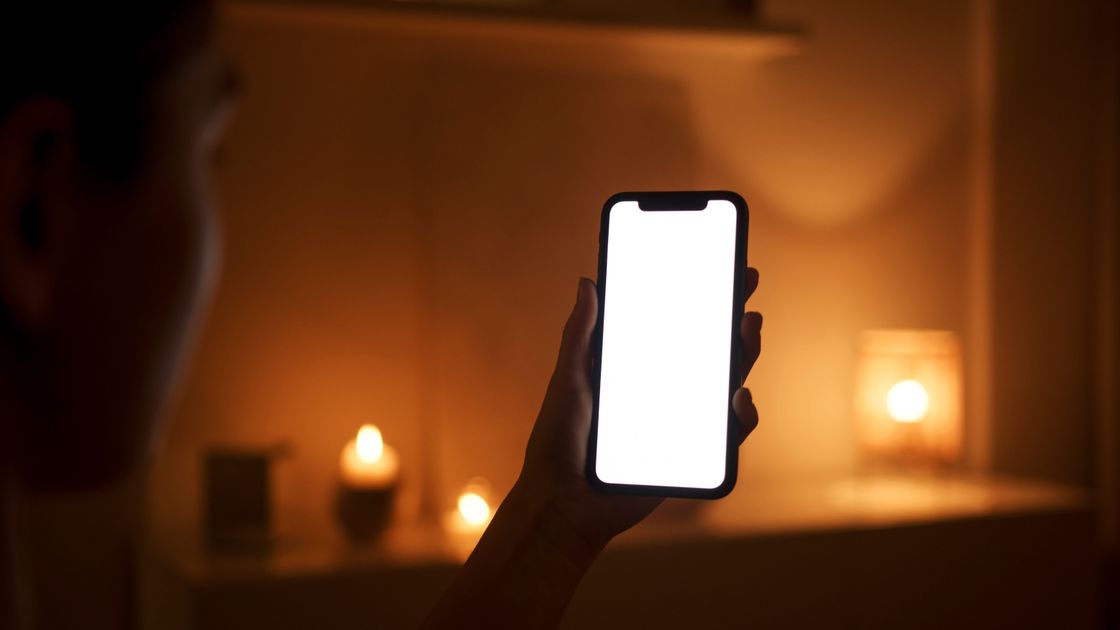
None of these need willpower. They need to be decided in advance and easy to reach. Pick one per feeling and write it down. Future you, at 2 a.m., will not want to improvise.
Save this for the next 2 a.m. spiral. Pin this friction checklist to your board so it’s there the moment your thumb starts moving on its own.
FAQ
Is doomscrolling a real condition?
It’s not a formal diagnosis, but it’s a real, measurable behavior. In 2022, a University of Florida team validated a 15-item scale for it (Sharma, Lee & Johnson, 2022). Later work linked it to distress, fear of missing out, and lower life satisfaction (Satici et al., 2022). A real pattern, no diagnosis required.
Does grayscale mode actually work?
Yes, and the numbers stay consistent. One study found grayscale cut screen time by about 40 minutes a day (Holte & Ferraro, 2020), and a 2026 replication with medical students found a 28-minute drop (Frontiers in Digital Health, 2026). A boring screen is less rewarding, so you reach for it less.
Why do I do it even when it makes me feel worse?
Because relief comes first and the cost comes later. Scrolling is short-term mood repair: you escape a bad feeling now, then the feed hands you fresh worry (Sirois & Pychyl, 2013). That flash of relief trains the habit, even though the net effect is a worse mood. It’s the loop, not a flaw in you.
Is my phone use ruining my mental health?
Honest answer: it depends on the level you mean. Across whole populations, the causal case is genuinely contested (Odgers, 2024; Sigaud, Rausch & Haidt, 2026). At the individual level, heavy doomscrolling reliably tracks with distress (Satici et al., 2022). If it’s hurting you, that’s real, and systems beat willpower for changing it.
The Bottom Line
You were never the problem. The feed is engineered to hold you, using random rewards and a scroll with no bottom, and it hijacks the same mood-repair reflex behind procrastination. That’s not a moral failing. It’s a design you can out-design. Willpower is a mood, and it fades by 10 p.m. Friction and a ready replacement don’t care how you feel. Build the environment once, and it protects you on your worst nights too.
Deciding your exit while the feed already has you is the part that fails. If you’d rather write the exits down before you need them, the Doomscroll Exit Cards give you one card per trigger, each with its study and one if-then move.
One small action today: switch your phone to grayscale right now. Settings, accessibility, color filters. Give it 48 hours before you decide. Then borrow the 2-minute rule for whatever you scroll to avoid.
Alex is the voice of Self Lab: practical psychology for people who are done with motivational fluff.
Sources
- Reuters Institute for the Study of Journalism, Digital News Report 2025 (Executive Summary), retrieved 2026-07-10, https://reutersinstitute.politics.ox.ac.uk/digital-news-report/2025/dnr-executive-summary
- University of Florida News, coverage of the doomscrolling scale (Sharma, Lee & Johnson, Technology, Mind, and Behavior, 2022), retrieved 2026-07-10, https://news.ufl.edu/2022/01/doomscrolling/
- Applied Research in Quality of Life (via PubMed Central), Satici et al., “Doomscrolling Scale: its Association with Personality Traits, Psychological Distress, Social Media Use, and Wellbeing”, retrieved 2026-07-10, https://pmc.ncbi.nlm.nih.gov/articles/PMC9580444/
- Computers in Human Behavior Reports (ScienceDirect), Shabahang et al., study linking doomscrolling to existential anxiety among US and Iranian students, retrieved 2026-07-10, https://www.sciencedirect.com/science/article/pii/S245195882400071X
- DataReportal, Digital 2026 Global Overview Report (social media time reported from GWI), retrieved 2026-07-10, https://datareportal.com/reports/digital-2026-global-overview-report
- Pew Research Center, “Americans’ Social Media Use 2025”, retrieved 2026-07-10, https://www.pewresearch.org/internet/2025/11/20/americans-social-media-use-2025/
- Addictive Behaviors (ScienceDirect), “Engineered highs” on variable-ratio reinforcement in behavioral addiction, retrieved 2026-07-10, https://www.sciencedirect.com/science/article/pii/S0306460323000217
- The Social Science Journal (Taylor & Francis), Holte & Ferraro, study of grayscale mode and screen time, retrieved 2026-07-10, https://www.tandfonline.com/doi/abs/10.1080/03623319.2020.1737461
- Cyberpsychology, Behavior, and Social Networking (via PubMed), Zimmermann & Sobolev, pre-registered RCT of grayscale versus self-set goals, retrieved 2026-07-10, https://pubmed.ncbi.nlm.nih.gov/36577008/
- International Journal of Mental Health and Addiction (Springer), Olson et al., ten-nudge friction intervention on smartphone use, retrieved 2026-07-10, https://link.springer.com/article/10.1007/s11469-022-00826-w
- Frontiers in Digital Health, 2026 replication of grayscale mode with medical students, retrieved 2026-07-10, https://www.frontiersin.org/journals/digital-health/articles/10.3389/fdgth.2026.1816095/full
- Social and Personality Psychology Compass (Wiley), Sirois & Pychyl, “Procrastination and the Priority of Short-Term Mood Regulation”, retrieved 2026-07-10, https://compass.onlinelibrary.wiley.com/doi/abs/10.1111/spc3.12011
- Nature (news), Odgers, critique of the social-media-and-teen-mental-health causal claim, retrieved 2026-07-10, https://www.nature.com/articles/d41586-024-00902-2
- Clinical Psychological Science (SAGE), Vuorre, Orben & Przybylski, null finding on media use and adolescent wellbeing, retrieved 2026-07-10, https://journals.sagepub.com/doi/full/10.1177/2167702621994549
- Clinical Psychological Science (SAGE), Sigaud, Rausch & Haidt, pro-causal analysis of social media and adolescent mental health, retrieved 2026-07-10, https://journals.sagepub.com/doi/10.1177/21677026261425910
- dscout, “Mobile Touches” instrumented study (2,617 touches per day), retrieved 2026-07-10, https://blog.dscout.com/mobile-touches
A free gift
Open the gift. We're not saying what's inside.
It's free, it fits on two pages, and it might ruin a few pieces of self-help advice for you. Open it?
One step left
It's The Debunk Deck.
Eight famous self-improvement rules that failed the science, with the study that killed each one and a line you fill in to make it yours. Two printable pages, in your inbox in under a minute.
Confirm your email and it lands in your inbox. One short email a week after that. Unsubscribe anytime.